A gentle introduction to Reiki energy healing
No jargon, no mystique. Here’s what Reiki is, how it works in a session, and what you can honestly expect to feel.
Reiki means “spirit & life energy”
Rooted in Japan and developed in the early 1900s by Mikao Usui, Reiki is a practice of gentle energy healing based on a simple idea: the body knows how to heal itself, and sometimes it just needs a quiet, present container to do it in.
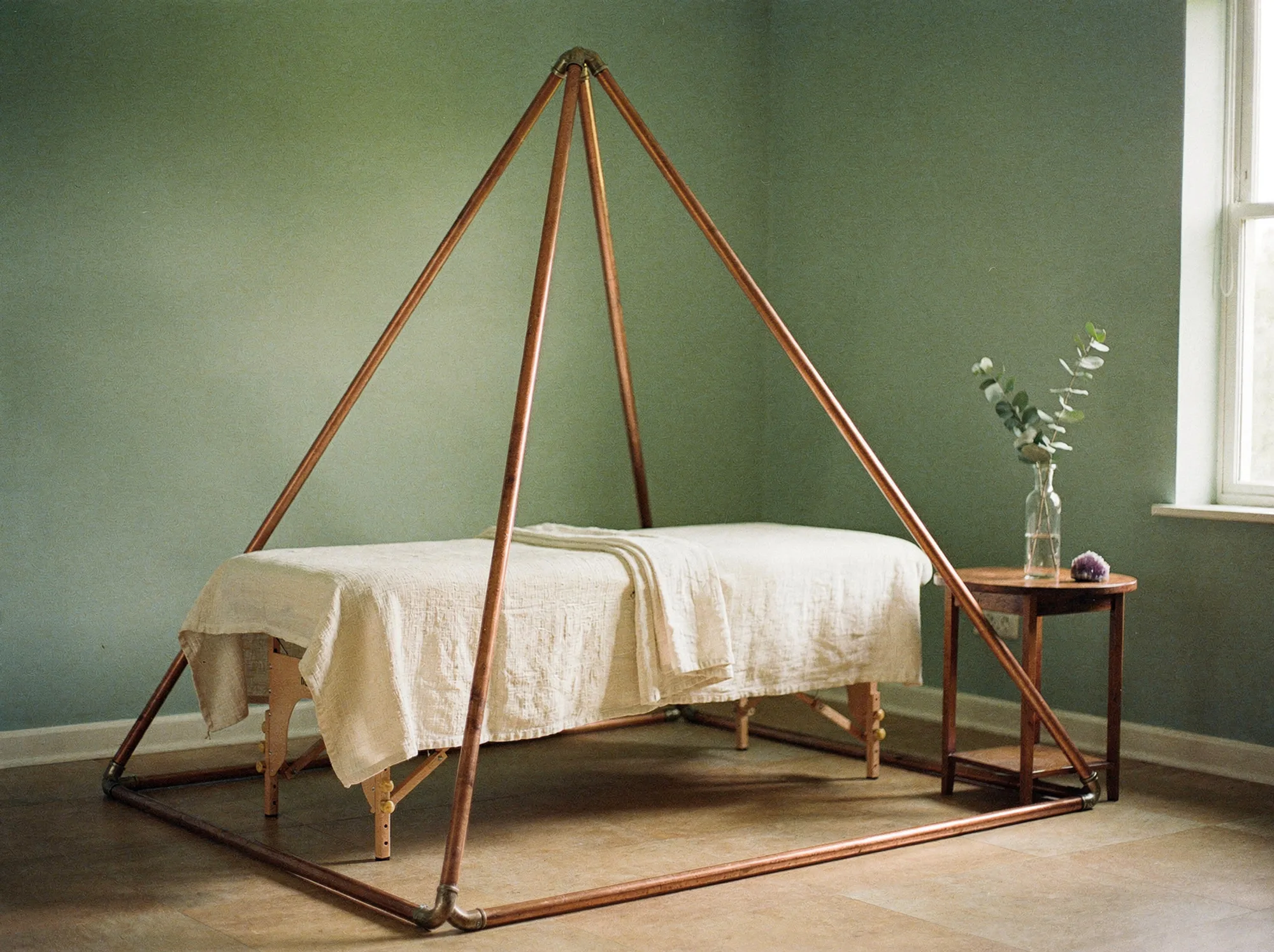
During a session, I rest my hands lightly on or just above your body, moving through a sequence of positions. Rather than forcing anything, the practice works with your own life force energy, supporting your body’s natural ability to rest, release, and restore.
- It is a relaxation practice, not a diagnosis
- Fully clothed and always consent-led throughout
- Complementary to, never a replacement for, medical care
What Reiki feels like
Slow, quiet, and different for everyone. There is no one right way for it to feel.
Most people describe Reiki as slow and quiet, like the moment your shoulders finally drop at the end of a long day. You stay warm and comfortable while your breathing softens and your mind gets quieter. What you notice may shift from visit to visit, and that is completely normal.
Gentle warmth
Many people notice soft warmth where hands rest, or a light tingling as tension starts to ease.
Heavy, then light
Limbs may feel heavy as you settle in, then lighter as the session goes on, like sinking into the table.
Drift and dream
It is common to drift between waking and sleep. Some see colours, some notice memories surface, some simply doze.
Different people feel different sensations, and feeling very little in the moment counts too. Many notice the shift later, in better sleep, a calmer mood, or a quieter mind.
That is normal too, and it does not mean nothing is happening. Some people simply rest. You are still welcome here, and you are still doing it right.
“People often say they don’t feel anything, and that’s completely fine. Reiki isn’t about dramatic sensations. It’s often just a quiet sense of release, the way you exhale at the end of a long day.”Ashley · Reiki practitioner
What happens in a session
A simple, unhurried rhythm you can expect, start to finish.
We talk
We start by checking in. You share what’s weighing on you, and I answer any questions you have.
You settle in
You lie down, fully clothed, and make yourself comfortable. Soft music, warm room, nothing to do.
I hold space
I go through a sequence of hand positions, resting gently while your body does its quiet work.
We close
We share what came up, if anything, and I suggest ways to carry the calm with you afterwards.
What Reiki can support
Reiki is not a cure, and I will never present it as one. It’s a complement to your own wellbeing and to professional care. It is a quiet space where your body and mind can soften, settle, and find their way back to balance:
- Stress & Anxiety: when your mind won’t switch off. A session gives your nervous system permission to downshift.
- Pain Management: alongside your medical team’s care, deep rest around ongoing discomfort and tension.
- Emotional Coping & Release: for grief, change, and the feelings with no neat name. Space to feel what’s present.
- Restlessness and difficulty switching off
- Stress, overwhelm, and burnout recovery
- Grief, loss, and seasons of change
- Support during medical treatment (with your team’s blessing)
Reiki complements professional medical and mental-health care. It never replaces it. If you’re working with a care team, you’re welcome here alongside them.
Curious to feel it for yourself?
A first session is about finding out whether this practice is for you, in this season.